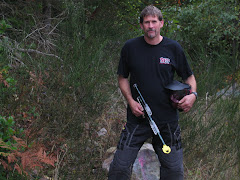
Saturday, October 17, 2009

Think Globally, Act Locally

I stole the title from our environmentalist friends, but we can use the thought to talk about the paintball industry just as well. This will also be a continuation of the Who has the Power article.

I think we can all agree that the paintball industry as a whole is in a bit of trouble. Retail and wholesale sales are down, the number of players showing up at fields is down overall, and manufacturers, fields and stores are closing at a faster rate than new ones replacing them.

When we have discussions about why this is taking place we get all sorts of interesting suggestions. One of the main ones that pops up is how play at the fields has changed over the years. The attitudes of the players have changed and we get all sorts of behavior problems showing up at field. Behavior problems that affect other players at the field, most importantly new players and those that aren’t looking for an extreme adventure when going to play paintball.

There are always those that suggest that players have to take responsibility for their own actions, that if we can change the attitudes of the players, we’ll be golden. But what are the odds of that ever happening? Even a first time player coming out on a company outing may look forward to being Rambo for a day and he fully intends to shoot everything in sight. He doesn’t care how it will affect the field’s business or how it will affect the industry or even how it might affect the people he is shooting up. Getting every player to play nice, just isn’t feasible. That’s not to say we can’t work on getting as high a percentage of players to play nice. The less people that are jerks, the better, obviously. Hopefully good behavior will rub off and spread. But there are realistic limits to the success of such an endeavor.

So how do we ”fix” the industry? What can we do to control the behavior of those that choose to behave badly? As a field owner, I can only try to control the behavior at my field. I can’t control the behavior at a field I am not involved with. But then I have to ask myself, why would I even need to concern myself with the behavior of players at other fields? I don’t. I have no influence anyway at any field other than my own and if another field owner chooses not to take control of his players, it’s his loss. If I provide a fun and safe place to play that’s all I can really do. And you know what, if every field owner does that, we’ll have an industry that’s not in trouble anymore.

If field owners of local fields start taking control of their customers, then the industry will be just fine. Field owners have the power to do that. If your local field is having problems because some of the customers are being jerks and it’s keeping other customers away, then your local field owner isn’t exerting his power correctly.

Friday, October 16, 2009

Who has the Power?

The paintball industry is still in a buzz over the expected .50 caliber push by GIMilsim. It’s slowly dying down only because every possible scenario has been discussed over and over again and I believe people’s fingertips are sore from keystroking.

As far as I know, nothing .50 cal related has been officially released yet, at least not for sale to the general public. GIMilsim had a booth set up at World Cup where they apparently had a couple of markers and some .50 cal paintballs for people to shoot at a range with targets placed at about 20’ out. Almost all those who took part have come back with reviews that .50 cal shot not much unlike .68 at the booth. The markers had very little kick, which makes sense since the energy to move the bolt and shoot the ball would be lower than a traditional .68 cal marker with .50 cal only having approximately 40% of the mass of .68 cal.

Apparently there was some on field shooting of the .50 cal as well with more mixed reviews. Some reported that there were more bounces than there should have been. There was also at least one report that the marker was chronoed higher than 300 fps. One would have thought if they were going to do a demonstration, they would have made sure the marker was firing at allowable velocities. On the other hand, might there have been less likelihood of impressing the onlookers below 300 fps? If so, who are they kidding. Eventually .50 cal will be in the hands of anyone that wants it and if the product is found to be inferior at 300 fps or less, end of story.

Maybe I’m wrong. Maybe there is a market for smaller ammo that allows for smaller more realistic equipment by those that don’t mind a few more bounces. I mean airsoft pellets all bounce, don’t they? But in reality, I don’t think there will be much of a market for a hybrid of paintball and airsoft. If you are going to play paintball, you are going to want the paintballs to break on your target. If you are gong to play honour ball, why use paintballs at all? Am I wrong?

Anyway, I didn’t really start writing this with a review or discussion of the merits of .50 cal. I wanted to talk about change in paintball and who mandates or controls potential change. .50 cal was obviously started by one man, Richmond Italia, with an idea to manufacture and market a product that was not widely accepted at this time. One man, with obvious industry connections, has been able to create interest and a potential market in a fairly large industry by talking to a few industry stakeholders and getting them onside.

Through intelligent marketing (marketing that didn’t cost him very much), he’s got the industry in a buzz with at least some people claiming that the industry will totally convert to this new format and many others sitting on the fence and at least accepting that it might happen or that there might be a partial acceptance of the new format.

That’s really quite impressive when we think that almost no one has any real play experience with this new format. It’s even more impressive when we think that similar formats (.43 cal, .62 cal and even former .50 cal) have been widely discarded as being inferior. Yet here we are, thousands of people debating on hundreds of forums, how this new format is going to change paintball.

What does this mean to the average player and to field and store owners? Do we even have a choice? Are .50 cal paintballs going to show up on the doorstep of every paintball store and paintball field? Are players going to be forced to buy new .50 cal equipment to shoot the new standard sized balls?

I don’t know about other field owners, but at our field, my business partner and I decide what inventory to buy. We buy what we want to buy, assuming it’s available. We don’t buy stuff just because our wholesaler tells us we should. We buy what we want and that is mostly based on what we think our customers want. So Mr. Italia, with the help of his friends at Smart Parts and Procaps can manufacture as much .50 cal balls and equipment as they want, but that doesn’t mean that I or other store and field owners are required to buy them. And I can guarantee you that if .50 cal is not at least close to performing at the level .68 cal, there won’t be much .50 cal stock rolling out of Procaps doors, at least not to North American destinations.

Mr. Italia may have the power to get the industry into a buzz, but in the end, the power lies with the consumer. If the product marketed by GIMilsim does not meet consumers needs or desires, it will fail.

Thursday, October 8, 2009

Field owner Interview - Mick Gray

The first installment of a series of field owner interviews can be found below. For the first installment, I have interviewed Mick Gray of T-Square Paintball outside of Little Rock, Arkansas. Mick posts almost daily in his blog, http://tsquarepaintball.blogspot.com/, and the website for T-Square paintball can be found here, http://www.tsquarepaintball.com/

Reiner: Thank you Mick for granting this interview and taking time to answer a few questions for us...us being me and the other five people who read this blog. Yeah, sorry. You haven’t hit the big times yet.

Why don’t you start out by giving us little background information about Mick Gray and T-Square Paintball. What did you do before operating a paintball field and what made you decide to open a paintball field & store? And for that matter, do you still have another job outside of paintball?

Mick: Thanks Reiner. Five readers? I'm jealous. I'll try not to scare them off. I settled here in Arkansas after retiring from the U.S. Air Force. I'm fortunate enough to be able to sustain myself on paintball alone but it would not be possible if I didn't own the 40 acres we play on and have a small apartment in the back of the pro-shop. I've managed to keep my overhead low by building T-Square Paintball one dollar at a time since 1995.

I think most folks will tell you they got into paintball after playing their first game. I got into it after an all night B.S. session with a guy that played at his last assignment in North Dakota. The next day I bought a Brass Eagle Stingray and brought it to work (I was still in the Air Force at the time.) and that led to 3 others buying guns - a Spyder, VM-68 and TippmannProlite.

I still had a year before military retirement and the only thing I was certain of was I was not going to retire and work for anyone but myself. I bought 15 more Stingrays and spread the word around the base and local community with fliers and before I knew what was happening I had two or three groups scheduled every weekend.

No business plan. No bank loan. Forty acres of flood plain. (After three days of rain it's all a foot under water as I type this but it will be dry by the week-end.) The best thing I had going was no zoning restrictions and no building codes. The limits of my imagination were the only thing to hold me back and having grown up chasing four brothers through the woods with sticks for guns and acorns for ammo I had plenty of ideas to ramp up the experience.

Reiner: Fourteen years in the paintball field business? I’m sure that’s considerably longer than the average paintball field in North America stays open for. Where did the name T-Square come from?

Mick: I've always been a bit of an entrepreneur. While I was still in the Air Force I had a business on the side named T-Square Publishing, a small desk top printing business that handled booklets in quantities too small for the big boys. This was before CAD, computer assisted drawing, so I used a drafting board and t-square to lay out the projects. I was a draftsman before I went into the service so a t-square has been a part of my life for many years. Also, it doesn't hurt that "T' and "S" are the first letters of my children's first names

Reiner: Are you the sole owner and manager of T-Square?

Mick: I am the sole owner with eight part time field workers. I call them field workers because they know from the start they may be reffing one day and filling sandbags the next. My daughter joined me a few years back and is slowly taking over the business. She does it all! Guys will brush by her to get to me to get their gun fixed. I get a kick out of their reaction when I pass the gun off to her and she makes a great repair.

Reiner: How big is the market that you draw from and are there many other paintball fields in the area?

Mick: I'm located just 12 miles from Arkansas' largest city (and capital), Little Rock, with a little over 180,000 people. That's a small market to some but it works fine for us. The field actually borders Little Rock Air Force Base. Some think that is our biggest market but I don't promote it for reasons I would rather not get into here. Military is less than 1% of our player base with 80% being church groups and birthday parties. Walk-ons use to be 35, almost 40% but that has dropped off with the economy. My only competition is across town and the market is plenty big enough for the both of us.

Reiner: Am I correct to interpret that the vast majority of your business is comprised of rental customers then? How has that part of your business faired with the downturn of the economy?

Mick: Sorry for the confusion. I'm not good with numbers and even worse at explaining them. A majority of my business (80%) is church groups and birthdays groups of 12 or more players. My group rate incentive is NO RENTAL FEE so rental income comes from what I described as a dwindling walk-on crowd. On average half need rentals so, yes, the drop off in walk-on traffic has hurt my rental income. Clear as mud? LOL

Reiner: I remember reading in one of your forum posts that you try real hard to control the Rate Of Fire at T-Square. Actually if I remember right, you were just as concerned about the sustained firing as you were the actual Rate of Fire. Can you tell us what you meant by that? Why is sustained fire a concern for you and how does it help your business to control it…and how do you control it?

I enforce a strict "three shot limit" on all my players. It's in all the advertising. It's in the safety briefing and it's a mantra my refs repeat by the minute. Rate of fire is how fast those three paintballs leave the marker. I've given up trying to control that. Sustained fire is how many times those three shots are fired.

If I allow players to shoot three balls and then three balls and then three balls with no break I have done nothing to control the amount of paint in the air. So the key is to convince players to take a "healthy" break between the three shots. A hundred times a day players hear me say, "EASY ON THE TRIGGER. Take a break between those three shots!" And no, I do not allow three round burst mode. Sounds contradictory but I believe in making players work for those three shots.

Nothing breaks my heart more than to see a young player, come out of the woods stitched from top to bottom with paint. People ask why I don't separate the players into groups of new players and experienced players. The only thing I detest more than seeing a young player get "lit up" (a term I hate) is having to put up with the nonsense that erupts among hard core players. When someone gets a little froggy I invite them to the tournament team practice on Saturday mornings. I find it interesting how many pass on that idea.

Reiner: So do you think the “three shot limit” and “easy on the trigger” philosophy has hurt the attendance at T-Square? Are players staying away because your rules are restricting them from playing like they want to play? Do you get feedback from players about this philosophy?

Mick: When I first opened in 1995 I didn't allow Autocockers (AC) or Automags (AM). They were the bad toys used by the bad boys. Back then that was my way of letting players know I wanted a fun field. I had an Autococker owner get in my face and tell me my field would not last 6 months. I questioned my own business sense but what I was doing felt right and business was growing. Then the "electros" hit the scene and I didn't know which way to turn.

That's when it occurred to me not to limit equipment but rather work on attitudes. I began allowing anything that was semi-auto. I spread the word that just because someone showed up with an Indy car at my go kart track it didn't mean they got to run over people. It got around that T-Square had all these wimpy rules (no bunkering, 20 foot rule, restricted rate of fire). Some players stopped coming and because they did, others started coming back more often. Before I knew it Moms and Dads and regulars were thanking me for running a fun field. And business continued to be very good.

Reiner: Does the rest of your field staff also repeat the “three shot limit” mantra? Or are you the only “heavy” at the T-Square?

Mick: My refs are an extension of me and they know the type of field I insist on running. It's tough for any young ref to tell an adult how to play so I tell the refs not to hesitate to blame the controlled play on me. One of their favourite lines - "Mick's going to fire me if you keep ripping off rounds." It works.

Reiner: How long are your play sessions and how many paintballs is your average customer shooting with your philosophy in play, during a session?

Mick: No doubt I could make more money from paint sales. Most players here spend about three hours on the field and go through 600 rounds. I understand that is a ridiculously low number of rounds compared to some fields. But less paint in the air means less stress on the field and less stress on the field means more people hanging around the pro-shop looking at guns and gear and more people coming back for another visit. I need the fingers on both hands and most of my toes to count the number of fields that opened up in Arkansas, made a bunch of money and then ran out of players in 6 months. T-Square is here to stay!

Reiner: So it sounds like your tough guy attitude is keeping the tough guys away, or at least making them play nice, and attracting people who just want to have fun.

Mick: "Tough Guy" attitude. I like that. At 5'5" and a buck thirty I think it's more my consistent attitude than it is a tough attitude. People see and read and hear the rules, test me and the refs a little and when they realize we are serious they fall in line. And yes, there are players who refuse to play here.

They make me appreciate even more the so called "hard core" players that do come out and follow the rules, give the new players a good game and take pride in sportsmanship. They scare the new players. They are decked out in tournament gear and equipment or they are camoed up and carry M-16's but the difference here is the new players are no longer scared after the first game and they want to come back.

Reiner: Does it bother you that some players decide that they don’t want to play with the three shot limit you impose and therefore don’t come to T-Square? Don’t you feel you are missing out on potential customers?

Mick: I would like to be able to please everyone. I offer open practice on Saturday mornings for teams and players that want to turn it up. It speaks volumes about a player that wants to rip and tear during rec ball play but doesn't want to come out on Saturday morning. It's impossible to make everyone happy.

Switching gears, are you optimistic about paintball’s future in general? What do you think the industry is doing well and what do you think it could improve on? And who is it that needs to work on making those changes?

Mick: Am I optimistic about paintball's future? I'm optimistic for rec ball play. Not so much for competition ball. Fortunately paintball can survive with out the tournament scene. But if the industry doesn't get off it's collective high horse and start supporting the hard working, dedicated field owners out here it's going to continue to be tough making a living from the game.

Misdirected marketing and lack of grass root promotion and support works against us getting new players educated about the real game and out to the field. Low profit margins and poor product quality control robs field and store owners of profit. While the vanity gun war continues there has not been a decent field rental gun offered in 10 years.

Paintball needs some new, old school thinkers. The old regime that started out as players has been pushed aside for CEO's and corporate profit margin. There is also an alarming lean toward mil-sim. If I had the money and means I would create a paintball company that did nothing but produce field rentals and other products that cater only to fields that run birthday parties and corporate outings.

In the mean time I do my part to keep paintball alive in my small portion of the world by keeping it fun and safe. As long as someone is still making 68 caliber paintballs and I can keep my aging rental fleet alive I will continue what I'm doing. After that? Who knows!

Wednesday, October 7, 2009

Field Owner Interviews

During the next little while I will be interviewing some field owners across North America to get their perspective on running a paintball field and their general feelings about the paintball industry. The first interview will be posted in the next day or so. I hope all six of the regular readers of the blog tune in to see what others in the industry have to say about running a field. It should be interesting.

Monday, October 5, 2009

More .50 Caliber Talk

Well, lots of .50 caliber talk lately. I guess that’s only natural with GI Milsim about to “officially” release their Paintball 2.0. I wish I had some great words of wisdom or some amazing prediction about what will happen, but I don’t. I’m really quite bored of the whole discussion. So much speculation about something that will fail or succeed quite quickly once revealed.

Will players embrace it? Who knows? Some might. Will fields find a way to offer both? Again, who knows. But if there is a market for it, you can bet fields will offer it. Will it hurt more? Will it hurt less? Will it fly as far? Will it be more accurate? Will it be less accurate? No one seems to know, so why is everyone getting all excited about this and supplying the marketers with free publicity (hey wait!, I’m guilty of this too).

How about we all just calm down and wait and see what the product is like and then we can discuss it.

Tuesday, September 29, 2009

What’s Different?

When opening a business most future entrepreneurs look around at their future competition to evaluate what they are doing right and what they think they are doing wrong. They will also look at other businesses in their industry they may not be competing with, possibly in other locations, that they want to emulate. If someone has found a formula for success, why not cash in on that and copy it? There is nothing wrong with that.

Unfortunately, most future business owners don’t do enough research. Paintball field owners are for the most part guilty of this. Most future field owners look around their potential market area, see what others are doing, copy the good and try to improve on the bad. But for the most part, they are copying what everyone else is doing with only minor changes, hoping it will be enough to attract a larger portion of the market to their field. Usually they concentrate on one aspect of the business to improve on over their competitors. For instance, one field owner may figure that kick-ass tourney fields are missing in the marketplace and will build great turf fields to attract all the players that find that important. Others may think that prices are too high and will offer lower prices to attract a larger portion of the market to his field. There is nothing wrong with taking any of these approaches if the field owner is committed to them and follows through with his plan. If all works well, it may work and he may get a bigger part of the pie.

In reality, this is small thinking though, in my opinion. Doing things better or making minor changes to attract a larger portion of the pie is fine, but why not go for the gusto and do what you need to do, to enlarge the pie and attract a whole new customer base? Every market in North America has all kinds of people that would more than likely love to play paintball, even though they may never have tried before or even given it much thought. What does a field owners need to do to attract those customers? What does a field owner need to do to keep those customers once they came once? What can a field do to stand out and be different from all the other fields to cash in on that potentially huge market? Doing the same as every other field with only minor changes isn’t going to do it.

If you are a potential field owner, I can’t tell you what that difference is. It’s probably different in every marketplace. I do know it doesn’t include marketing to paintballers. Those already playing paintball don’t need to be marketed too much. You either have what they want or you don’t. You need to be different so that those not already playing paintball feel the need to try it, and they feel the need to try it at your field. Don’t be afraid to do things different from what everyone else is doing. There is no success without risk. Just make sure it’s calculated risk.

Wednesday, September 2, 2009

Staffing a Paintball Field

We have a lot of staff that work at TNT Paintball. Other than my business partner and myself, none of them work at TNT full time. Over time, we’ve had some that have worked close to full time hours, but most work on a very casual basis, basically working a day here and there, mostly to support their own paintball habit. We have a few refs that work at a regular schedule (i.e. every Saturday).

Most of our staff is drawn from our regular customers. This works well for the most part, as they already know, for the most part, how we operate our business. We usually have a pretty good idea what their character is like from watching them play and how they act in the Staging Area between games. We still need to make sure, they understand our general philosophy.

A little while ago, one of our staff that began his playing days at TNT (like many of them have), graduated” to tournament paintball. This is not uncommon, and in general I don’t have a problem with them working at our field and playing tournament ball somewhere else when they are not working for us. But we have to be careful. Sometimes, these staff members start to adopt some of the philosophies they pick up at other fields they hang out at and bring them back to our field.

This was the case with this particular staff member. A little TNT philosophy lesson may be in order here, before I go on. When signing customers up upon arrival, they often ask how many paintballs they will need. I usually tell them that our average customers shoots a little over 500 paintballs if they stay all day, but the exact number varies from player to player a little. Most choose to buy 500 paintballs and then they might come back later in the day to get another 100 or 200. Sometimes a couple of guys will split another 500 between themselves. This has worked pretty well for us and seems to be a good amount for people to have fun, without “starving” themselves of paintballs.

The staff member in question though, started pushing higher paintballs sales. He would say things like, “The average customer uses 500 to 700 paintballs but if you really want to have a good time, you might want to get 1,000. That way you won’t have to worry about running out.”

I took him aside and asked him why he was doing this? He replied that he was trying to increase sales and make us more money. The problem here is that this particular staff member was using his experiences and his new found love for shooting high volumes of paintballs, and letting it affect how he operated when working at TNT Paintball.

I had to explain in great detail our philosophy of having players shoot an average somewhere between 500 and 700 paintballs per day. I explained to him that I didn’t want that average to increase to 1,000 paintballs per day, even if it meant that we were making more money from each individual customer. It took him a while to understand what I was trying to get across to him. He was shooting well over 1,000 paintballs per day at his new found speedball hobby and I guess assumed, because he was having fun shooting lots of paintball, that everyone would automatically have more fun as well shooting more paintballs.

My point here is that if you have staff, in any business, you need to make sure they understand your general philosophy. You may have a general mission statement that your staff is aware of, but they need guidance to make sure that general mission is actually achieved, the way you, as the owner/manager envisions it. There are far too many businesses, and many paintball fields are very guilty of this, that let their staff run their businesses the way they (the staff) want to run them. A business owner can’t let this happen.

Hiring and managing staff, is probably the single most important (and difficult) part of running a business. A business’ staff needs to be an extension of the owner/manager’s vision. If it’s not, the business is being pulled in different directions. Businesses need to have a consistent direction they are moving in and everyone involved in the business has to be made aware of what that direction is and what they need to do, to make sure it stays on course.